Wayfinding Signage

The art of wayfinding design is a science – let us help you get it right!

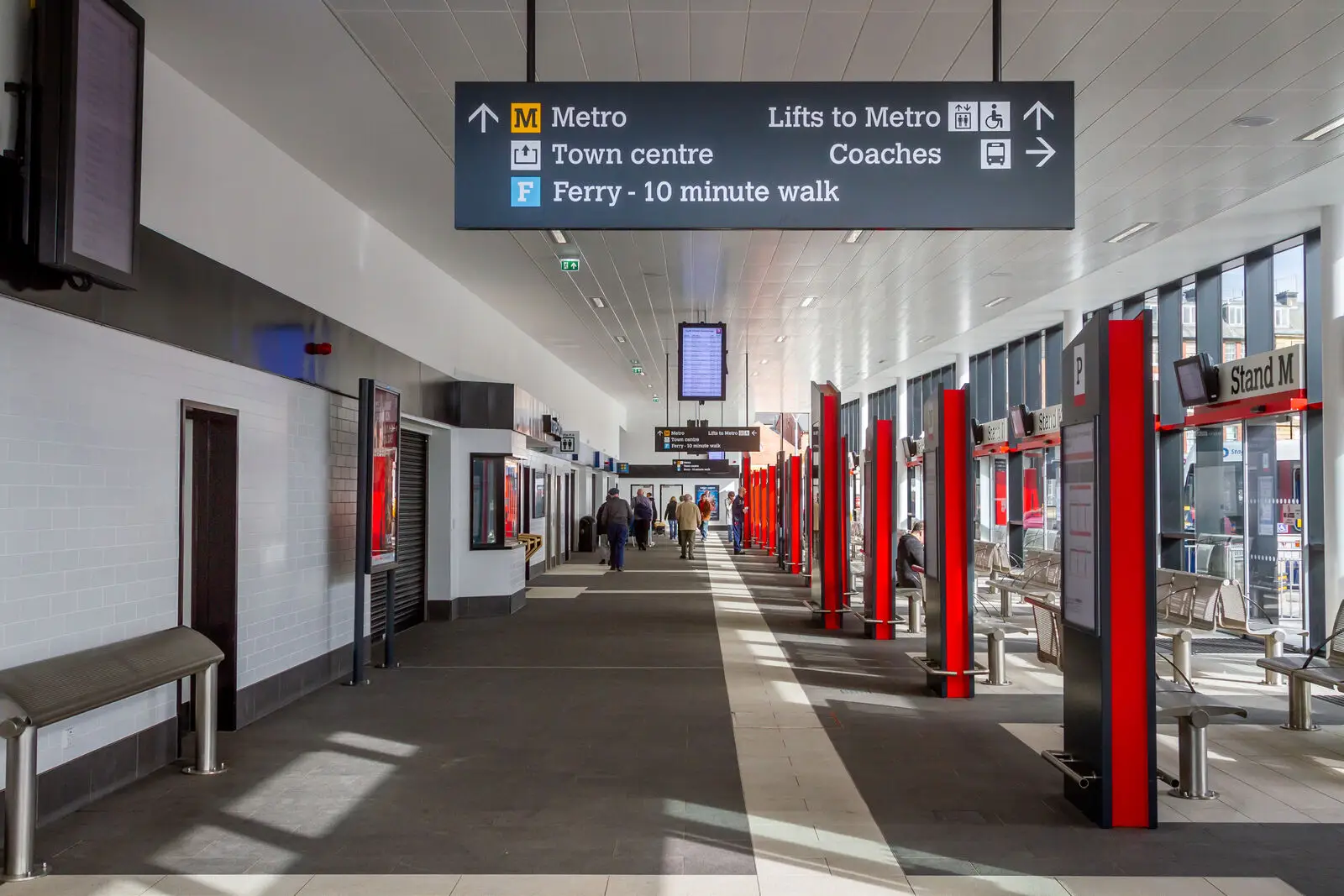
Wayfinding signage plays a crucial role in shaping a brand’s identity

Clear, well designed signage not only helps visitors find their way efficiently but also reinforces brand consistency

Ensuring seamless navigation throughout a site, through the careful use of color, typography, and design elements that reflect the company’s identity.

A well considered wayfinding system reduces frustration, enhances accessibility, and creates a positive first impression, making interactions with the brand more intuitive and enjoyable. Whether in a retail space, corporate office, or large venue, effective wayfinding strengthens trust, improves engagement, and ultimately contributes to a more professional and welcoming brand experience.

From extensive venue signage to commercial offices and retail parks, effectively branding can make or break a brand experience.

Types of wayfinding signage

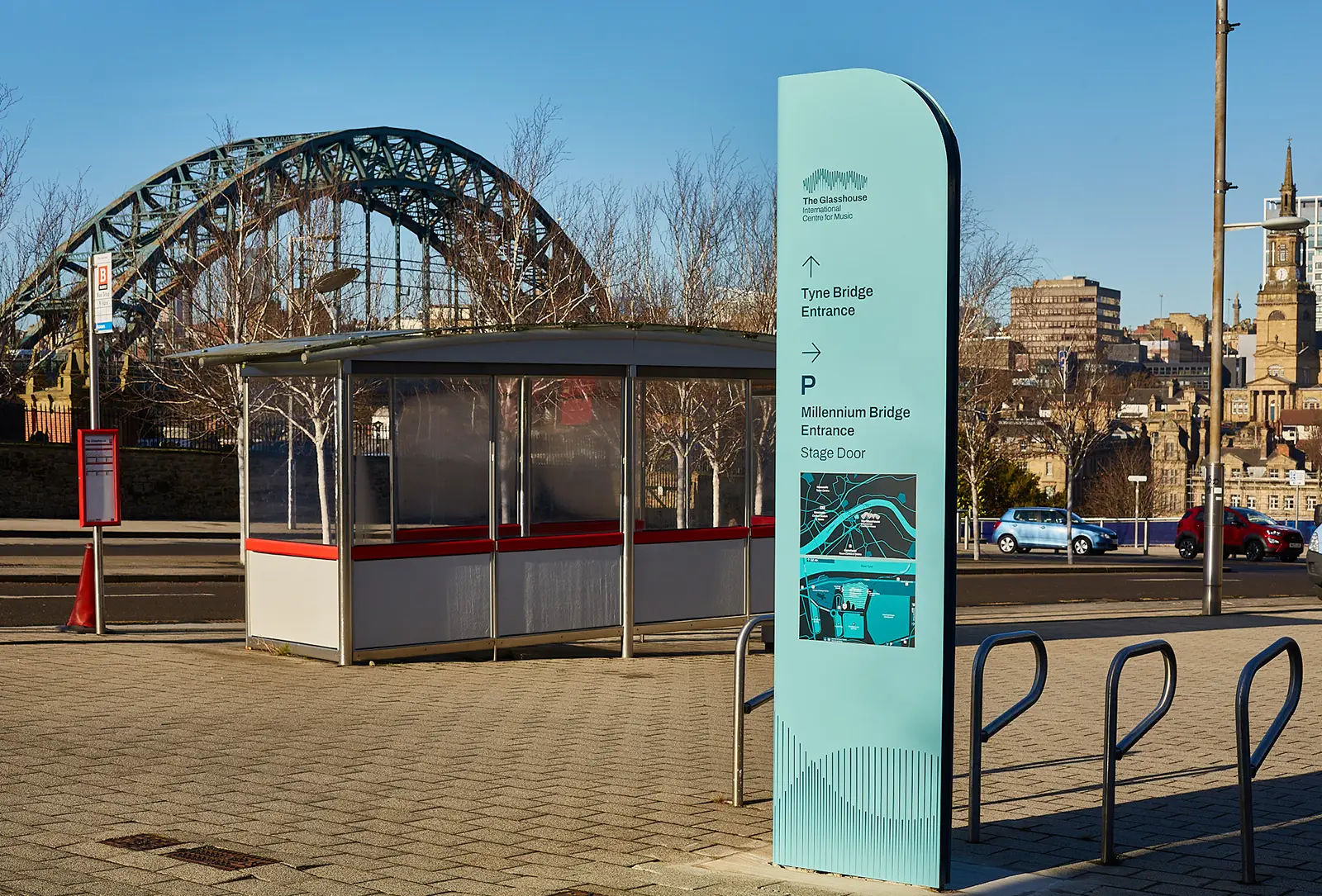
A modern signpost and bus shelter with a bridge and cityscape in the background.

External totems

Totems, sometimes known as monoliths or pylons, positioned within car parks and entrances are often the first wayfinding opportunity to help visitors navigate around your site.

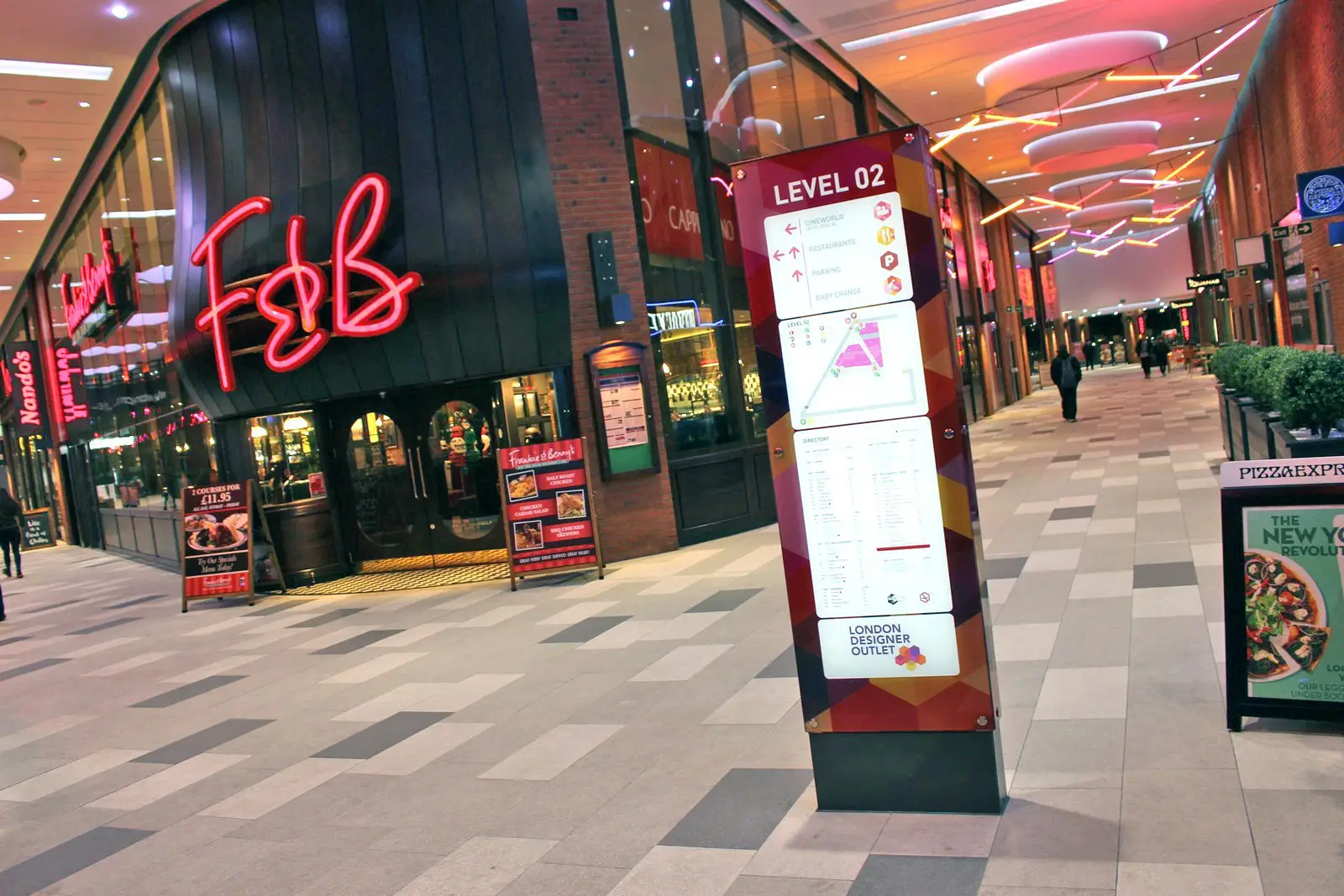
Shopping mall corridor with neon-lit restaurant, directory sign, and people walking under colorful ceiling lights.

Internal totems

Internal totems provide an excellent opportunity to make a brand statement AND assist with the customer journey.

A street signpost stands at a junction between red brick buildings and a landscaped area.

Fingerpointers

Fingerpointers are often used externally to direct traffic and journey around areas such as car parks or large shopping areas.
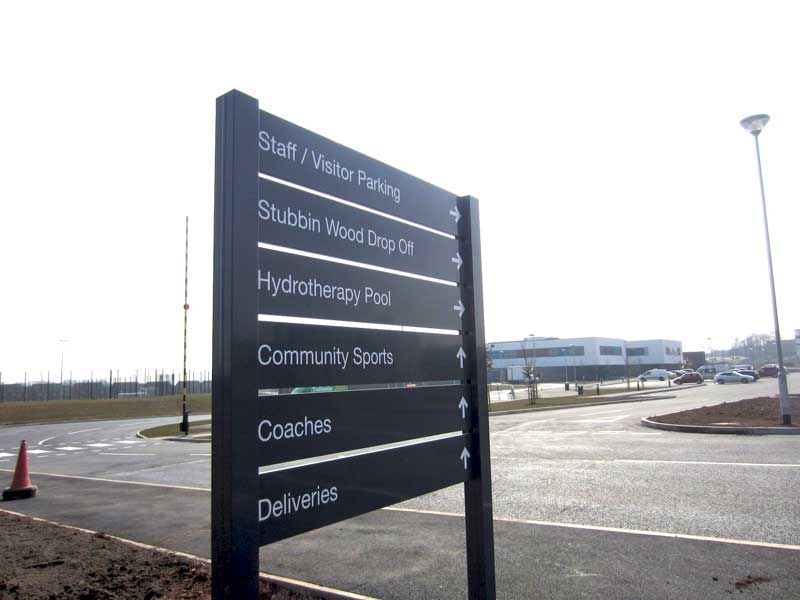
Directional sign with arrows for parking, drop-off, hydrotherapy pool, sports, coaches, and deliveries.

Panel and post wayfinders

Effective direction around a site can be fulfilled using panel and post wayfinders. Using separate panels can offer flexibility to message updates as a site develops
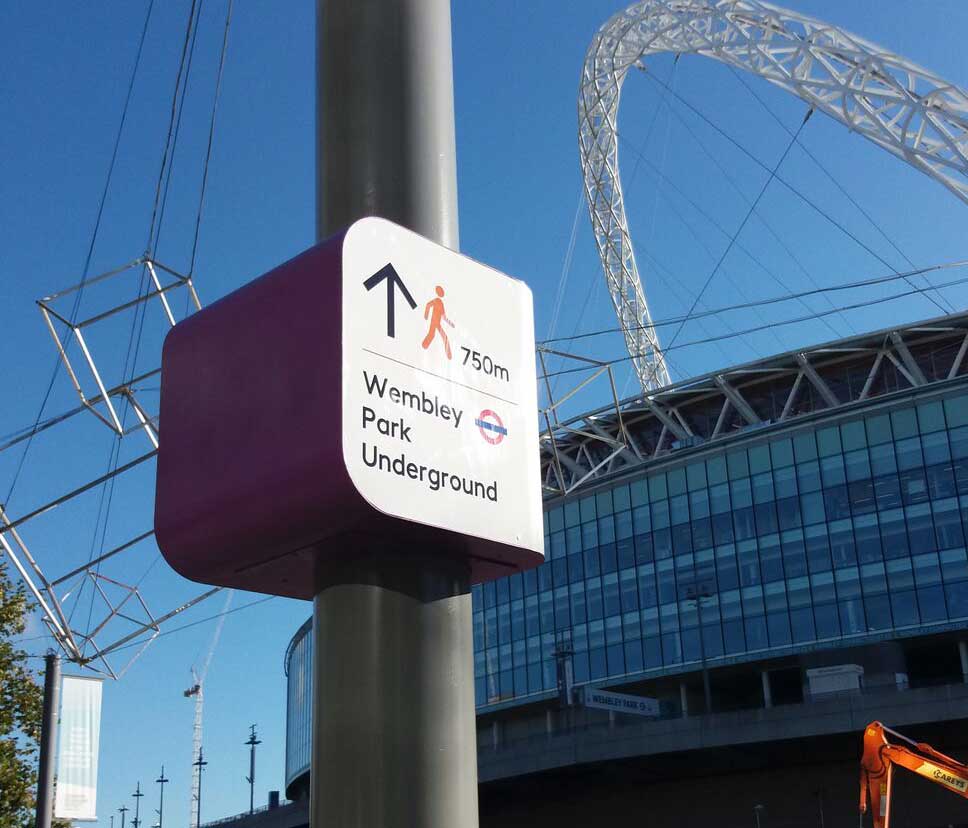
Sign for Wembley Park Underground, 750m away, with Wembley Stadium's arch in the background.

Post-mounted wayfinders

Make use of lamp posts and other site structures to help direct traffic around your site.
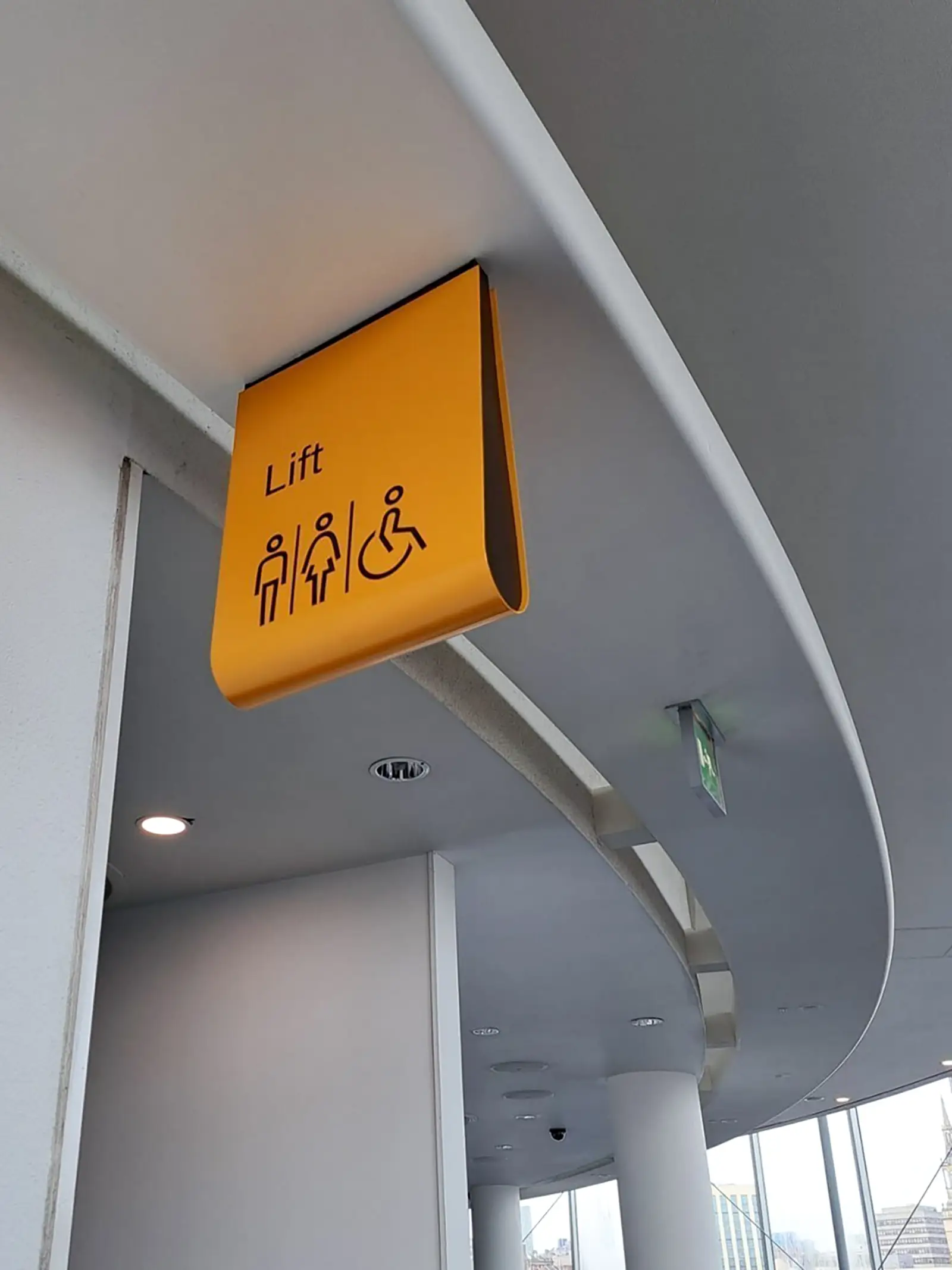
Yellow lift sign with icons for people, elderly, and wheelchair users hanging from the ceiling.

Ceiling signs

Wayfinders positioned on ceilings provide excellent vantage points to identify locations in a building from far away

Symbols on a wall include an arrow, wheelchair access, and a shower icon.

Wall wayfinders

Making use of key touchpoint locations within your building to highlight destinations, wall wayfinders offer the ideal opportunity for seamless navigation.
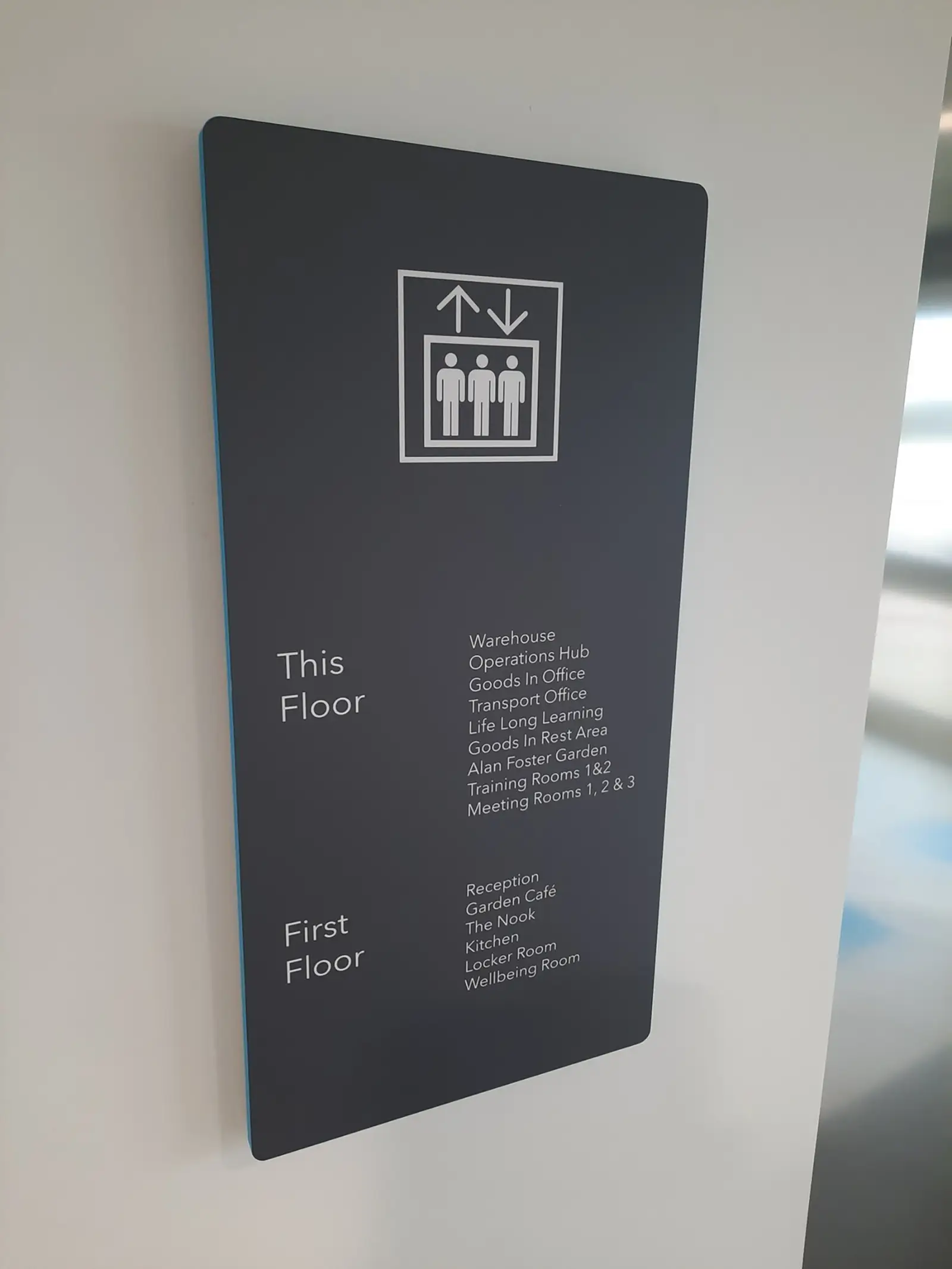
Elevator sign with floor directory listing various rooms and facilities on two floors.

Lift points

Make use of lifts and access points to ensure your visitors know where they are in a building.
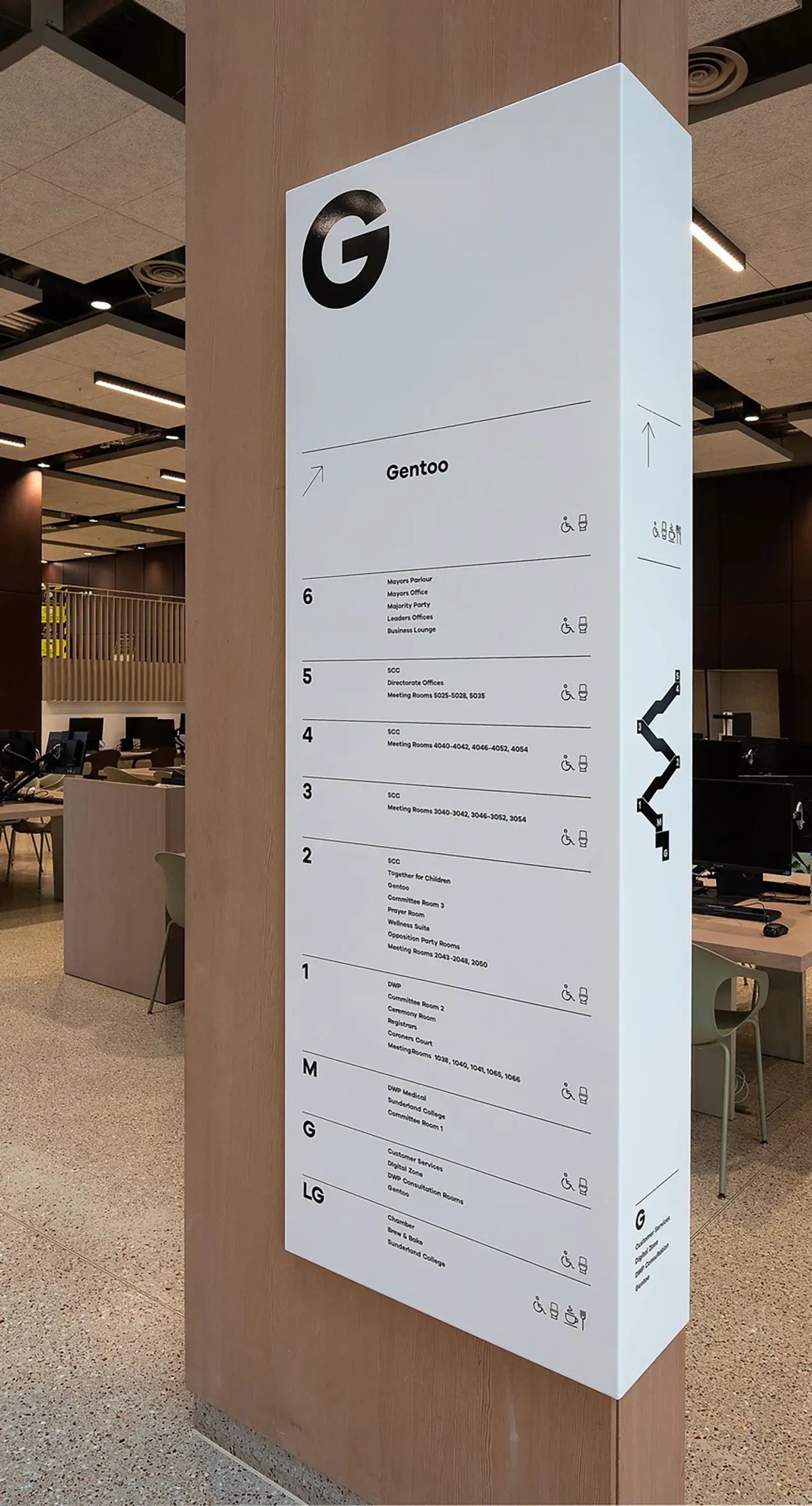
White directory sign with black text and icons mounted on a wooden pillar in an office.

Column wayfinders

Don’t forget using columns and building structures to help guide your visitors from multiple angles of approach.
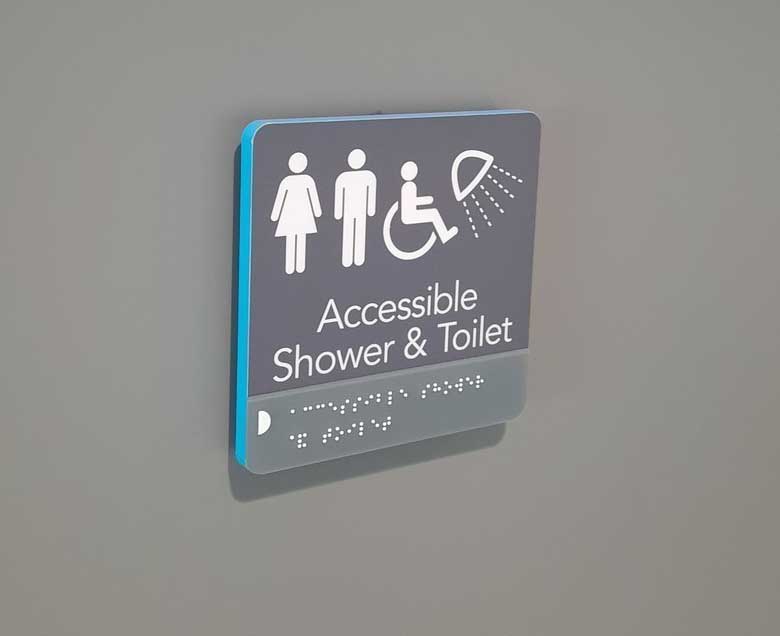
Sign with symbols for women, men, wheelchair users, and text "Accessible Shower & Toilet.

Accessibility

Don’t forget accessibility within a wayfinding scheme – combine braille within sign design to create wayfinding signage for all
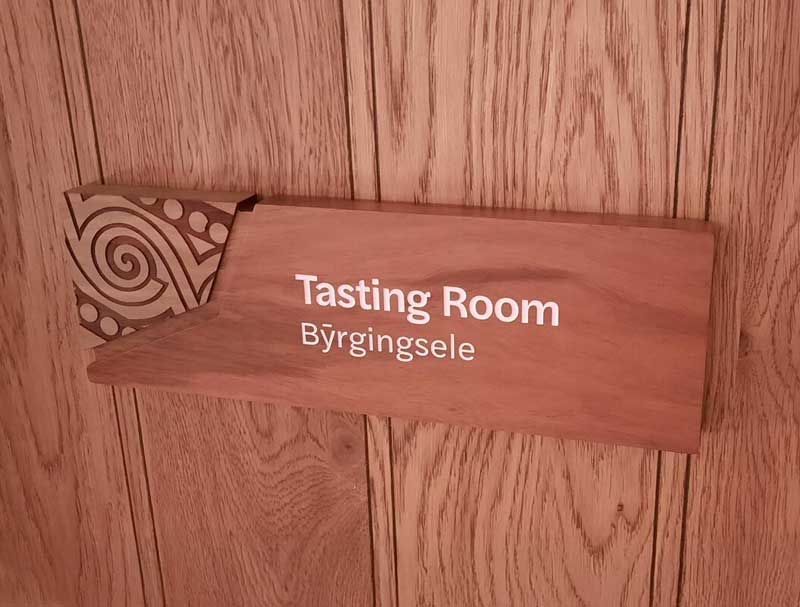
Wooden sign with "Tasting Room" and "Býrgingsele" in white text, featuring a decorative swirl.

Door signs

Once the visitor has reached a destination, confirm it with the use of branded door signs.
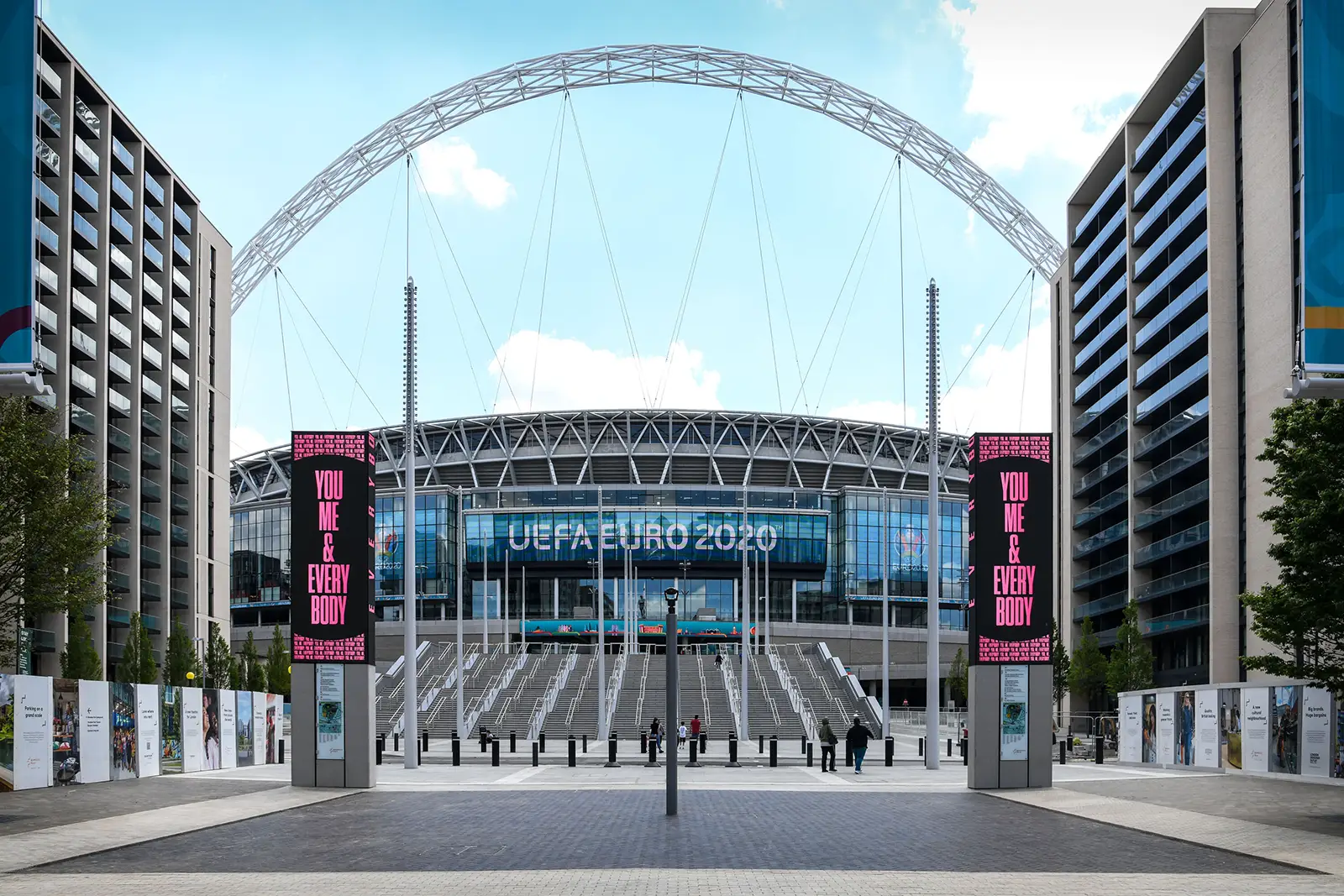
Our process

01

Site visit

Site visits are key to shaping effective wayfinding – helping our design team understand visitor flow, access routes, and key touchpoints to build a tailored navigation strategy.
Learn more >

02

Site insights and brand identity

Design begins with site insights and brand identity, working with a client to understand visitor journeys, routes in and out of a site and identifying key locations. From here, our designers can help locate touchpoints and design a signage family that answers function alongside brand aesthetics.
Learn more >

03

Prototyping proposed designs

Before production, we may suggest prototyping proposed designs – selecting materials and finishes that meet functional needs and reflect the brand – offering clients review options to ensure the best result go into manufacture.
Learn more >

04

Technical design

Our in-house technical team ensures all assets are designed with safety in mind, collaborating with structural engineers where required to guarantee fabricated items – such as totems – are built and installed to withstand external factors like wind.
Learn more >

05

Manufacture

Manufacture follows approved specifications, with each department ensuring output reflects the scheme’s intent – from BS EN 1090 structural fabrication to expert hand-finishing, all backed by award-winning expertise.

06

Installation

Installation crews are strategically located across the UK to offer quick response and to keep our travel carbon footprint to a minimum. All our installation engineers hold accreditations to evidence training and capability to work across multiple sectors.
Learn more >

Our wayfinding signage projects

FAQs

The site I work at isn’t finished yet - can you help?

Yes! In fact, being invited at this early stage enables us to offer a greater level of consultancy and guidance to a client, advising on groundworks needed for totem wayfinders for example. We enjoy having a more collaborative approach with stakeholders to the development of a wayfinding scheme and our design team are expert in assessing new sites and how pedestrians will move through the spaces.

I need to consider changing my signs at intervals - will they be flexible enough to do this?

They can be! If we understand how often your signs need to be changed, for example in response to an update in tenancy or if the site is being launched in phases, then our designers can develop signs that offer this flexibility. It may be that we propose using finger-pointers that can be updated on site when needed, adding / removing arms. It may be that we can replace a panel with another on-site using a modular system. There are multiple options available for your scheme.

How can I be sure my wayfinding is considerate of disabilities?

There are multiple factors our designers consider when developing a wayfinding scheme that is considerate of accessibility. Elements such as placement, legibility and visibility, compliance with accessibility standards set by the DDA, use of braille etc. are all taken into consideration at the design stage.

Contact Us

If you have a wayfinding scheme in its infancy and would like support in developing it or if you already have it all specified and simply need expert manufacture and installation, we can help.

Get in touch today for help in bringing your scheme to life.

Follow us

Fill out our contact form below and our team will be in touch!


    I consent to sharing my details with astley*